

Latest
Press Release
13 October 2026
Partners Mark Tajikistan’s Ratification of the UN Convention on the Rights of Persons with Disabilities and Discuss Implementation Priorities
Learn more
Press Release
21 September 2026
Multi-Stakeholder Consultation Workshop on Developing a National Framework on Disaster Risk Data Governance in Tajikistan
Learn more
Video
21 September 2026
UN Resident Coordinator Parvathy Ramaswami’s Message on International Day of Peace
Learn more
Latest
The Sustainable Development Goals in Tajikistan
The Sustainable Development Goals are a global call to action to end poverty, protect the earth’s environment and climate, and ensure that people everywhere can enjoy peace and prosperity. These are the goals the UN is working on in Tajikistan:
Press Release
25 February 2026
Government of Tajikistan and United Nations reviewed and validated strategic priorities for the next cycle of the joint Sustainable Development Cooperation Framework for 2027–2030
The UN and the Government of Republic of Tajikistan jointly launched the new UNSDCF process in 2025, with the Evaluation of the current UNSDCF for 2023-2026, and a Country Analysis. National, Regional and Thematic consultations were organized with diverse stakeholders that informed the priorities of the new UNSDCF 2027-2030. The Minister of Economic Development and Trade of Republic of Tajikistan, H. E. Abdurahmonzoda Abdurahmon Safarali thanked the UN Country Team in Tajikistan for the productive cooperation and highlighted the role of partners in ensuring country macroeconomic stability and advancing its strategic priorities. He also noted: “The green economic development, human capital development and advancement of social sectors, environmental protection, rule of law and reducing the impact of external factors are among the priorities of the newly adopted Mid-Term Development Programme of Tajikistan 2026-2030 (MTDP), and the new UNSDCF will effectively contribute to its implementation and results”. Mrs. Parvathy Ramaswami, UN Resident Coordinator in Tajikistan added “I would like to sincerely thank all our government partners for their dedication, commitment and productive partnerships in the effective implementation of the current UNSDCF (2023-2026). The new cycle of our joint cooperation is firmly anchored in national priorities, centrered on the sustainable development goals and is people-oriented, strengthening our joint commitment to leave no one behind, responsive to the aspirations of the people in Tajikistan.” During the meeting, the Government and UN representatives reviewed and validated the priorities of the new UNSDCF 2027-2030, and the programme strategies of four UN Agencies, reaffirming their alignment with the national priorities. The representatives of state bodies provided additional recommendations on the focus areas to be incorporated when finalizing the country programme strategy documents.The UNSDCF is an overarching programming document and the most important instrument for planning and implementation of the UN development activities at country level in support of the implementation of the national priorities 2030 Agenda for Sustainable Development. The new UNSDCF 2027-2030 is expected to be fully endorsed and signed by the United Nations and the Government of Republic of Tajikistan by the third quarter of 2026.
1 of 3
Press Release
24 October 2025
Youth Lead the Way: UN Day 2025 Celebrated in Tajikistan through Dialogue on Peace and Trust
The event brought together young leaders, government officials, diplomats, and representatives of UN agencies to reflect on the UN’s founding values of peace, human rights, equality, sustainable development and international cooperation. The gathering also celebrated the 30th anniversary of Turkmenistan’s permanent neutrality, emphasizing the importance of peace and trust as pillars of international cooperation. During the event the global #UN80 photo exhibition that showcases human stories from various countries, highlighting the many ways in which UN positively impacts people’s lives.In her opening remarks, Ms. Parvathy Ramaswami, UN Resident Coordinator in Tajikistan, highlighted the importance of youth engagement: “As we celebrate 80 years of the United Nations, young people are at the heart of our shared future. Your ideas, innovation, and determination are key to building peace, trust, and sustainability in today’s complex world.” H. E. Aymyrat Gochmyradov, Ambassador Extraordinary and Plenipotentiary of Turkmenistan to Tajikistan noted: “Turkmenistan gives a great importance to the role of youth—as a driving force for peace and progress. We witness that it is the youth that is capable of becoming the main representatives of a culture of peace and trust”. The programme included interactive youth panel discussions on promoting peace, climate action, human rights, gender equality, and innovation. Participants contributed ideas and personal commitments on a symbolic “Commitment Wall” by pledging individual actions for peace and sustainability in their communities. Representatives from the Ministry of Foreign Affairs, the Committee of Youth Affairs and Sports, and Embassy of Turkmenistan commended the strong spirit of partnership between Tajikistan, Turkmenistan, and the United Nations in advancing multilateralism, regional dialogue and cooperation and youth empowerment. The event concluded with a shared call to action for greater collaboration between youth, government, and international partners to advance the Sustainable Development Goals (SDGs) and strengthen trust as the foundation for peace and progress.
1 of 3
Press Release
02 April 2026
Round Table Reviews Progress on National Human Rights Action Plan and Outlines Next Steps
UN Human Rights Central Asia, in cooperation with the Human Rights Guarantees Department of the Executive Office of the President of the Republic of Tajikistan, the Public Foundation Notabene, and International Partnership for Human Rights (IPHR), and with financial support from the European Union, convened a round table to review progress in the implementation of the First Action Plan (2023–2025) under the National Human Rights Strategy of the Republic of Tajikistan until 2038 and to discuss the development of a new action plan.“Over nearly three years since the adoption of the Action Plan, significant work has been carried out. At the same time, there are areas that require more serious attention. Consultations with civil society are important both for an objective assessment of progress achieved and for the preparation of the new Action Plan”, noted Sodikzoda Khokimbek, Head of Section at the Human Rights Guarantees Department of the Executive Office of the President of Tajikistan. The round table brought together more than 80 representatives of state authorities, civil society, and international organizations, providing a platform for dialogue, stocktaking, and forward-looking recommendations.“The implementation of the National Strategy is not possible without the systematic participation of civil society, which provides independent expertise, monitoring, and a link to the real needs of people. Such cooperation already exists—sometimes more active, sometimes more formal—and we hope to continue being part of this important process”, emphasized Nigina Bahrieva, representative of the Public Foundation Notabene.Participants shared information on the work accomplished and developed recommendations for the new plan.“Experience shows that action plans produce results when there is regular coordination between the State, civil society, Parliament, and development partners. We need to ensure a more active role of Parliament in implementing human rights obligations in the future”, stated Suhrob Shoev, OHCHR National Programme Coordinator.Participants agreed to continue work on the development of the new Action Plan in the coming weeks and, if necessary, to convene additional consultations with civil society.
1 of 3
Story
20 April 2026
From Tradition to Transformation: Rethinking Volunteering in Central Asia
There is a word in Kazakhstan—Asar. It describes a simple but powerful idea: when someone is in need, the community comes together to help. No contracts, no formalities, just people showing up for one another.That spirit has not disappeared. If anything, it has strengthened. Over the past few years, Kazakhstan has made a deliberate effort to elevate volunteerism—from declaring 2020 the Year of Volunteers, to championing 2024 as the Year of the Volunteer Movement in the Commonwealth of Independent States (CIS) and creating momentum toward 2026 as the International Year of Volunteers for Sustainable Development.What stands out is not just the ambition but the way it has been implemented. In Kazakhstan, volunteering is not treated as a side activity. It is embedded in how things get done—in disaster response, education, environmental protection, healthcare, or search and rescue—as ministries, local authorities, and volunteer networks increasingly work side-by-side.With its new Constitution encouraging volunteerism in Article 31, Kazakhstan is also making a broader point: volunteering matters socially and institutionally. For countries looking to strengthen civic engagement, this offers a compelling model.This evolution is not happening in isolation. Around the world, volunteering is being rediscovered as something deeply practical—a flexible way to respond to complex and fast-moving challenges.Traditional forms of engagement remain essential. Community cleanups and tree planting—these continue to anchor environmental action. But new models are emerging alongside them. Online volunteering is expanding rapidly, allowing people to contribute skills, share knowledge, and collaborate across borders.As we have learned from the State of Volunteering in Central Asia Review, led by United Nations Volunteers (UNV) in 2024, the region reflects this global shift while staying rooted in its own traditions of mutual support. Governments, civil society, business, and communities are working together more systematically, and volunteerism is gaining recognition from environmental action to education, social services, and emergency response.And yet, there is a paradox.Volunteers are everywhere, doing essential work—reducing risks, protecting ecosystems, supporting services—but their contributions often remain invisible in national systems. They are felt but not always counted. Appreciated, but not always supported.This is the key message emerging from the State of the World’s Volunteerism Report 2026: recognizing volunteerism is not about counting hours. It is about understanding how volunteers strengthen social cohesion, improve resilience, and help countries develop.For Central Asia, this is particularly important. While the region has a strong foundation of solidarity, to fully harness it, that tradition now needs to be matched with recognition, evidence, and investment. Volunteers need training. Systems need coordination. Contributions need to be reflected in policies and plans.Volunteering should not be about goodwill alone. It can become part of how countries nurture capacity.This is also where the role of the United Nations (UN) is evolving.Through the United Nations Development Programme (UNDP), we work with governments to integrate volunteer action into national development, climate, and environmental strategies—so that volunteers do more than fill gaps; they strengthen public systems. Through UNV, we mobilize volunteers—skilled, diverse, and increasingly digital—matching needs and capabilities, widening access, and ensuring that contributions are effective.In Central Asia, similar approaches are already taking hold at both national and regional levels. Around the Aral Sea, for example, volunteers — including UN Volunteers — are contributing to environmental restoration and strengthening community resilience.But this cannot stop there.Environmental risks do not respect borders—and neither should the responses. This is not about one-off campaigns. When volunteer efforts are properly supported and aligned with policy, they can build real, lasting capacity.That is why 2026 matters.The International Year of Volunteers for Sustainable Development should not be another awareness campaign. It can be a turning point—a moment to invest in regional and national systems that make volunteerism more effective, more inclusive, and more visible in Central Asia’s development.Ultimately, the story of volunteering in this region is not new. What is new is that moments like the Regional Ecological Summit in Astana create a new opportunity to turn tradition into something even more powerful: a structured, recognized, and resourced force for sustainable development.That is an opportunity we cannot afford to miss.Authors: Haoliang Xu is the Associate Administrator of the United Nations Development Programme, Toily Kurbanov is the Executive Coordinator of United Nations Volunteers.
1 of 5

Story
22 March 2026
Tajikistan Manages Water with AI Innovation
Parvathy Ramaswami, the United Nations Resident Coordinator in Tajikistan, reflects on the country’s long-standing partnership with the UN and explores how water stewardship and artificial intelligence (AI) innovation can together drive resilient, green and inclusive sustainable development if managed responsibly. Last year, on the eve of the first International High-level Conference on Glaciers’ Preservation in Dushanbe, I had the opportunity to visit the spectacular Vanjyakh (formerly Fedchenko) Glacier. Located in the Pamir Mountains, it is the longest glacier outside the Earth’s polar regions, stretching 77 kilometres (47 miles). There, I was reminded that glaciers are the world’s water towers and must be protected.Tajikistan’s role as the “water tower” of Central Asia is both historic and strategic. The glaciers and rivers flowing from its mountains provide freshwater to millions across the region. Water is not only a vital resource but also a cornerstone of national identity, diplomacy and regional cooperation.Yet climate change is causing glaciers to melt faster, pressuring water systems and intensifying floods and droughts. This makes sustainably managing water one of the country’s biggest challenges for the future.At the same time, I see how new technologies, especially AI, can create opportunities to improve how water is used, managed, and better protected. For example, AI can help predict glacier melt and river flow more accurately. It can also strengthen early warning systems for natural hazards and improve irrigation and hydropower planning. These tools can support Tajikistan and its neighbors in adapting to climate change and better preparing for disasters.Leadership and partnerships address challengesHowever, AI itself brings new challenges. Data centres and digital systems use large amounts of water and energy, especially for cooling. This raises questions about water use, transparency and local environmental impacts. If not managed carefully, the very technologies meant to protect water resources could put more strain on them.In this sense, Tajikistan’s water and AI stories are similar: both can shape the country’s future but must be managed carefully.New partnerships and Tajikistan’s global leadership are offsetting these risks. Since the UN began its work in Tajikistan in 1993, cooperation with the Government and partners has improved water access and management. This work has evolved from providing humanitarian aid to developing environmentally sustainable programmes that use AI.Over three decades, Tajikistan has become a leading global voice on water. The country began by declaring 2003 the International Year of Freshwater and continued its advocacy through two decade-long campaigns dedicated to water.More recently, Tajikistan championed a global effort to declare 2025 the International Year of Glaciers’ Preservation. It also hosted the first International Conference on Glaciers’ Preservation in Dushanbe, highlighting the immediate impacts of glacier loss. Preparations are underway, in collaboration with the UN, for the fourth Dushanbe Water Action Decade Conference in 2026, which will strengthen international collaboration and ensure that water and technology remain national and international priorities.These events bring governments and organizations together, fostering agreement on using AI without harming water resources.The emerging role of AI in water managementIn 2025, Tajikistan put forward a UN resolution on the “Role of AI in creating new opportunities for sustainable development in Central Asia,” reflecting its goal of using AI to benefit one of the youngest regions on the planet.In water management, AI already provides practical tools, such as satellite monitoring, to map glaciers, river basins and water flows more accurately. UN agencies in Tajikistan are supporting the Government in leveraging these digital tools to improve climate resilience. A recent example is the “Glacier Lifelines” virtual reality equipment provided to Tajik scientists, which visualizes glacier changes and their impacts.Building on these immersive tools, digital platforms are also translating data into actionable insights. With support from the UN Environment Programme (UNEP), the Atlas of Environmental Change offers an interactive online tool where users can track glacial retreat, model water impacts, and guide decisions about reservoirs, conservation, and early warning systems.These innovations are being scaled through regional projects that combine technology with on-the-ground action. The Central Asia Regional Project on Glacial Lake Outburst Floods (GLOFCA), led by the UN Educational, Scientific and Cultural Organization (UNESCO) and financed by the Adaptation Fund, is supporting the region in managing the risks posed by floods from glacier lakes breaking apart. Running from 2021 to 2027, the project combines AI analysis with local efforts, ensuring that monitoring leads to practical risk reduction. For example, automatic sensors are being installed to monitor snow, temperature and precipitation. Meanwhile, radio communication and early warning systems help communities prepare. Trackers follow changes in glacial lakes, and hazard modeling identifies the most dangerous zones.As AI transforms the collection and utilization of data to safeguard communities, Tajikistan will be better positioned to foresee climate impacts while continuing to involve local communities.A shared vision for water and innovationThe future of water security depends on international cooperation, new technologies and strong national systems and resources. Tajikistan’s leadership in preserving water, together with emerging digital tools, offers real opportunities to advance all three.The UN team in Tajikistan is dedicated to safeguarding resources, assisting communities to withstand shocks, and ensuring that innovation benefits both people and the environment. By integrating science, policy, and partnerships, water can continue to contribute to prosperity not only in Tajikistan and Central Asia but also worldwide.Water has always linked countries. By using technology and AI responsibly, working together and demonstrating careful leadership, we can create a sustainable and resilient future – and protect it now and for generations to come.This blog was authored by Parvathy Ramaswami, the United Nations Resident Coordinator in Tajikistan. Learn more about the UN's work in Tajikistan on the our website.
1 of 5

Story
29 September 2025
Mushroom Production that Changed Lives
Valijon Mirzoev, a farmer from a small village of Kharangoni miyona, whose innovative approach to mushroom farming transformed not only his life but also the lives of those in his family. “I began to sell mushrooms at local markets and to nearby restaurants in Dushanbe city and Bokhtar town, where I found a ready customer eager for fresh, organic produce. During the spring season this year, I harvested about 1,000 kg of mushrooms and sold TJS 35,000 (around USD$3,600), which I am satisfied with this profit. This amount of money can support breadwinners to feed their families without going into migration”, says Valijon. In the mountainous district of Varzob, where agriculture has been less developed due to the lack of arable land, the untapped potential of alternative farming methods is gradually gaining recognition. Among these methods, mushroom cultivation stands out as a lucrative venture that requires relatively less space and investment. This is the story of 21-year-old Valijon Mirzoev, a farmer from a small village of Kharangoni miyona, whose innovative approach to mushroom farming transformed not only his life but also the lives of those in his family. Usually, unemployment makes the people in his area, like many others, travel to Russia for seasonal migration, but Valijon acted differently.As a young economist, Valijon realized that the conventional methods of farming in his region were often met with challenges such as fluctuating market prices and unpredictable weather patterns. In search of a sustainable solution, he stumbled upon the idea of mushroom cultivation—a venture that would lead him to success beyond his imagination.In 2024, after completing his degree in accounting and digital economy at the Tajik National University, Valijon practiced his banking knowledge in Tajikistan’s Humo Bank. But after receiving information about the World Food Programme (WFP) and its support to local producers and farmers, it was very interesting for him to participate in innovative projects. Especially, his interest in mushroom cultivation was increased during a workshop organized by WFP and its agronomists, which highlighted the high demand for mushrooms in urban markets. With limited resources but immense determination, Valijon decided to experiment with growing mushrooms. He started small, utilizing a portion of his family’s land and an abandoned shed that he converted into a makeshift mushroom farm. He received the mushroom bags and construction materials for producing room from WFP with the support from the American people. Later, he invested his savings into buying mycelium (seeds) and setting up the necessary infrastructure to maintain the ideal growing conditions.The initial phase of Valijon’s venture was fraught with challenges. The learning curve was steep; sometimes he faced issues with humidity control. Additionally, the lack of knowledge about marketing his produce posed another hurdle. Valijon realized that he needed to equip himself with better information and skills. He turned to online resources. He wanted to attend more workshops and seek advice from experienced mushroom farmers outside of Tajikistan. He used the money earned from his farm. He also visited some mushroom cultivation ventures for practical classes. After several attempts, he finally succeeded in harvesting his first substantial yield. The satisfaction of seeing his hard work come to fruition was immense. Valijon quickly learned how to refine his techniques, focusing on quality production and efficient harvesting methods. With the growing demand for his mushrooms, Valijon reinvested his profits into expanding his operations. He plans to introduce different varieties of mushrooms to further increase his customer base. His farm became a hub for knowledge exchange, where he would teach other farmers about mushroom cultivation and share his experiences.In 2025, WFP conducted a master class for mushroom producers to re-engage and motivate them to strengthen their technical capacity. The master class was led by Valijon Mirzoev and brought together other project beneficiaries from Shahrinav, Yovon, and Varzob districts and Vahdat town for peer-to-peer learning. Through this initiative, WFP was able to connect the participants with a successful peer, fostering knowledge exchange and peer-support to sustain their businesses. Today, Valijon Mirzoev’s mushroom farm is a thriving enterprise that generates substantial income, not only for himself but also for many families in his village. His journey is a testament to the power of innovation in agriculture, demonstrating that alternative farming practices can lead to sustainable livelihoods. “Valijon’s journey is a powerful example of how innovation, persistence, and technical support can unlock new opportunities for young farmers in rural areas. His success in mushroom production proves that even in regions with limited arable land, sustainable agriculture is not only possible — it can thrive. By turning a simple shed into a productive farm and sharing his knowledge with others, he is helping transform local food systems and inspiring a new generation of agricultural entrepreneurs”, says WFP agronomist Dalerjon Nabiev.“Now, Valijon is not only a mushroom producer, but he also produces mushroom bags for selling and provides advice to other farmers regarding mushroom production and preparation of mushroom bags. Looking ahead, Valijon plans to further expand his farm and engage all seven members of his family in dealing with mushroom cultivation”, says Muqimjon Muminov, project beneficiary from Shahrinav District who attended Valijon’s master class.This journey from a young farmer to a successful entrepreneur in mushroom cultivation is a compelling narrative of resilience, innovation, and community empowerment. Valijon’s story highlights the potential of alternative farming practices in transforming rural economies and inspiring a new generation of farmers. As Tajikistan continues to grapple with agricultural challenges, Valijon's success serves as a beacon of hope, illustrating that with the right approach, the future of farming can indeed be bright.
1 of 5

Story
22 August 2025
How School Cooks from Farkhor Became National Champions Two Years in a Row
With warmth to children and dedication to work, Dilorom Karimova and Zulfiya Alieva earned well-deserved recognition – the Best School Cook award – by turning everyday school meals into something special.As the new week starts, the appetizing scent of fresh-baked bread and warm soup drifts through school hallways across Tajikistan. For the cooks Dilorom Karimova from School #33 and Zulfiya Alieva from School #44 in the Farkhor district, this is more than just a working routine. In the rhythm of the school kitchen, they found their voice.The winners of the national Best School Cook Contest 2023 and 2024 – an annual event organized by WFP Tajikistan and Social and Industrial Foodservice Institute (SIFI) and designed to enhance school cooks’ competencies and encourage nutritious meals for children – agree that children’s smiles are the biggest appreciation to their work. “Sometimes children write little verses to express their gratitude to the cook’s work – it touches me deeply and gives inspiration”, says Dilorom Karimova, the winner of the Best School Cook Contest 2023. Since 2022, The Best School Cook Contest has been held as part of broader WFP’s efforts to promote healthy diets at schools and enhance the nutritional value of children’s meals in Tajikistan. This event is a platform for knowledge-sharing, creativity, and national recognition for school cooks.Dilorom remembers the first years of working at school – in the 2000s, she prepared meals for more than 400 children. To make sure that every child would receive a nutritious meal, she cooked late into the night. With a smile, she says that after 25 years, now cooking for 350 schoolchildren and her growing family of 8 children, 22 grandchildren, and one great-grandchild no longer feels like a challenge. It is simply a part of who she is.Dilorom believes that it is possible to create a masterpiece from simple and accessible ingredients – potatoes or pulses – fantasy and practice will help. Like any cook, she has her culinary secrets. But there is one she freely shares — the secret to making every meal delicious and every workday a joy:“I approach work with sincerity and put my heart into it – that’s my true secret”. Her colleague from School #44 Zulfiya Alieva, who has become the Best School Cook in 2024, adds: “A cook’s task goes beyond making food — it’s about giving love and care to children and welcoming them with an open heart”.Her career as a school cook began 2 years ago, and at that time, she had already become a high-class professional, proudly carrying her well-earned status. Cooking has been Zulfiya’s passion since childhood — and today, she brings the same love and dedication to her work as she does when cooking for her two daughters.Zulfiya says that school cooks’ work is about children. When making a menu, she asks in advance about their preferences for the week to come. Her kindness is shown in every detail – the way she serves each plate, gently wipes up soup spilled by an energetic boy, and speaks to the children with calm warmth.Zulfiya emphasizes the empowering impact of the Best School Cook Contest in diversifying school meals, strengthening cooking skills and creativity, and fostering the use of local products.For her, the victory in the competition became an incentive for further development as a cook, while Dilorom points out that it was both an honor and a proof that 25 years of hard work had all been worth it.Dilorom and Zulfiya genuinely care to make meals well-balanced, diversified, nutritious, and packed with vitamins. They use fresh and dried fruits and vegetables grown locally — either from the school gardens or brought in by children’s parents – and encourage other cooks to do so.Among the many sources Zulfiya finds culinary inspiration in, the WFP Tajikistan School Meals Recipe Book is one she returns to often:“I address the School Meals Recipe Book to find fresh ideas of what to cook for children at school and for my family, my daughters”. Dilorom and Zulfiya note that, after the competition, support from parents and concerned citizens has grown, as the children are now nourished by true champions of school nutrition. Yet both point out that having a school bakery in Farkhor would significantly enhance school cooks’ work.Despite all the remaining difficulties – electricity outages, especially during the winter season, long working shifts in the kitchen, heavy pots – their faces shine with energy and motivation. The example of Dilorom and Zulfiya is a testament of enduring love for what they do. Their journey speaks for thousands of school cooks of Tajikistan – whose hands work early, whose hearts stay open, and whose love is served on every plate.
1 of 5

Story
29 May 2025
‘We are the present’: Tajik climate activist urges leaders to include youth voices in dialogue
At the end of April, Fariza Dzhobirova attended a Model United Nations Conference on Glaciers’ Preservation in Tajikistan’s capital, Dushanbe, where she represented Switzerland.For Ms. Dzhobirova, it was a rehearsal of sorts for the actual High-level Conference on Glaciers’ Preservation which began on Thursday in Dushanbe. There, she will serve as a panel member representing her own country.“The [Model UN] conference gave me a platform to raise my voice, collaborate with like-minded peers from across the region and develop policy recommendations that we hope will influence real-world decisions,” she said.The High-level Conference on Glaciers’ Preservation, hosted by the Government of Tajikistan and supported by a variety of United Nations agencies, will work to underline the extreme urgency of melting glaciers, elevating it as a global climate and development challenge. Youth voices are the present and the futureBefore the conference, we sat down with Ms. Dzhobirova to discuss what motivates her climate activism. What inspired you to get involved in the climate movement?Growing up in Tajikistan, where more than 90% of our freshwater comes from glaciers, I’ve seen how climate change is already impacting people’s lives. Rivers are shrinking, water is becoming less accessible, and natural disasters like landslides and floods are affecting more and more communities.I’ve met a family who lost their home because of mudflow. I saw a teenage girl from that family of the same age as me that had totally different problems because of this climate-related disaster. I was thinking about my classes. She was thinking about how to survive.And I know there are many examples similar to this - farmers whose land can no longer be irrigated and children whose futures are at risk. Seeing this pain and injustice made it impossible for me to stay silent or uninvolved.Participating in the upcoming Glaciers’ Preservation conference means a lot to me. It’s about raising the voices of people who are often left out of global discussions. For me, it’s a chance to speak on behalf of my generation and my country, and to show that young people are ready to be part of the solution.What message do you hope to share at the conference about the impact of climate change on your community and generation?Being invited to speak is a great responsibility for me. It’s a chance to represent not only Tajikistan, but the voice of a generation.My message is that young people are not just the future — we are the present, and we are ready to contribute today. Climate change is not only about the environment — it’s about how we live, how we work, how we learn. It affects our opportunities, our mental health, our ability to plan for the future. And yet, many young people are still excluded from decision-making processes.At the conference, I want to encourage leaders and policymakers to truly listen not just to the facts and data, but to the experiences and hopes of young people. When you give youth a platform, you don’t just invest in their potential — you strengthen the resilience and sustainability of entire communities.Youth voices are becoming increasingly important in global climate conversations. How do you see the role of young people in shaping solutions?I truly believe that young people have a unique role to play in shaping more just, inclusive and forward-looking climate solutions. We bring fresh ideas, the courage to question outdated systems and a strong sense of responsibility for the future.In countries like Tajikistan, where glaciers are directly connected to people’s livelihoods, youth are already stepping up. What we need now is more trust and investment in young people. We don’t expect to solve everything alone, but we do hope to be included — in dialogue, in decision-making, and in designing real solutions.Protecting glaciers and water resources is not just a technical challenge; it’s a human one. By working together — across generations and borders — we can make our region stronger, more resilient, and more united in the face of climate change.
1 of 5
Press Release
13 October 2026
Partners Mark Tajikistan’s Ratification of the UN Convention on the Rights of Persons with Disabilities and Discuss Implementation Priorities
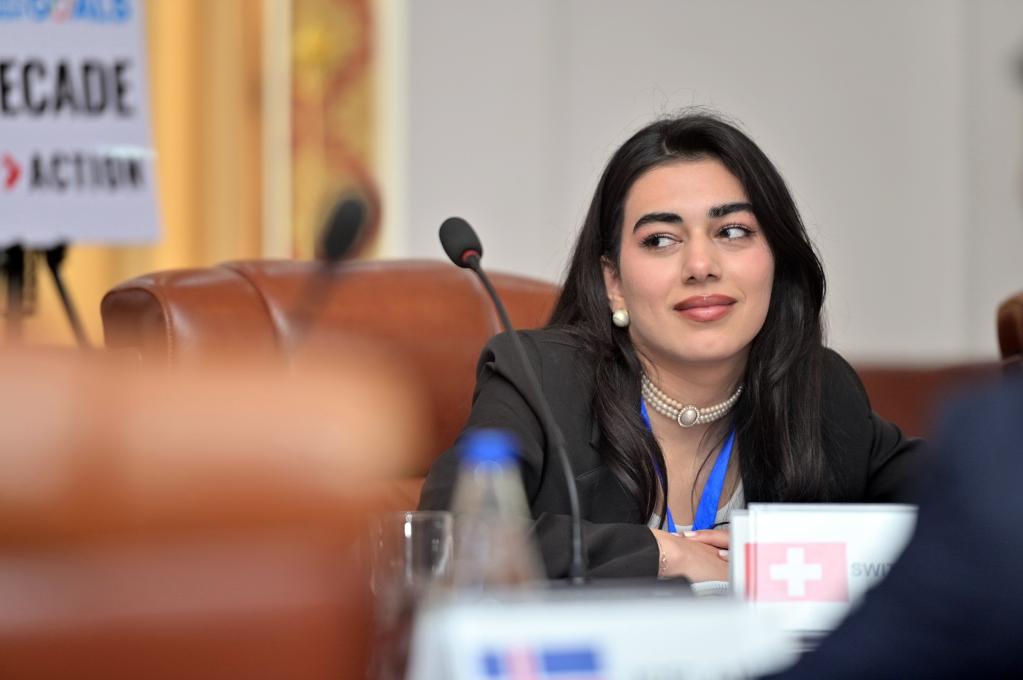
The roundtable was organized by the Majlisi Namoyandagon of the Majlisi Oli of the Republic of Tajikistan, UN in Tajikistan and the National Union of Persons with Disabilities of Tajikistan. Discussions focused on priority areas for action and recommendations for the next steps towards implementing the Convention.Ms. Mavsuma Muini, Deputy Chairperson of the Majlisi Namoyandagon of the Majlisi Oli of the Republic of Tajikistan, welcomed participants and underscored the importance of the CRPD’s ratification for the country. She also highlighted the role of all partners in achieving this significant milestone. In her opening remarks, UN Resident Coordinator in Tajikistan Ms. Parvathy Ramaswami noted: “Persons with disabilities are equal rights-holders, not recipients of charity. Their rights, dignity, choices and participation must be respected and protected. Let us make ratification the beginning of lasting change, towards a Tajikistan where every person can live with dignity, exercise their rights and contribute fully to the country's development”.Participants discussed how ratification of the Convention creates opportunities to advance the rights of persons with disabilities, strengthen their participation in society and promote equal opportunities. They also emphasized the importance of cooperation among government institutions, the UN and civil society in advancing inclusive development, ensuring that persons with disabilities can fully exercise their rights, and supporting Tajikistan’s progress towards the Sustainable Development Goals (SDGs), in line with the principle of leaving no one behind. The ratification of the Convention marks an important milestone in Tajikistan’s efforts to promote human rights, equality and inclusion. Building on the progress made since the country signed the Convention in 2018, ratification provides an opportunity to further strengthen national legislation, policies and institutional mechanisms to ensure that persons with disabilities can enjoy and exercise their rights on an equal basis with others.
1 of 5
Press Release
21 September 2026
Multi-Stakeholder Consultation Workshop on Developing a National Framework on Disaster Risk Data Governance in Tajikistan
The event brought together representatives of ministries and government agencies, development partners, and international organizations. The main objective of the workshop was to strengthen inter-agency cooperation and improve mechanisms for the collection, sharing, and management of disaster risk data including the development of a National Framework for Inclusive Disaster Risk Data Governance. The workshop also contributed to further expanding the ongoing collaboration of the Committee with ESCAP-APDIM, UNDRR, the Government of Switzerland and other partners, to strengthen disaster risk information governance and management in Tajikistan. Deputy Chairman of the Committee, Major General Muhabbat Ibrohimzoda, emphasized in his remarks that establishing a unified and integrated data management system is essential for accurate risk assessment, timely decision-making, the planning of preventive measures, and the development of effective early warning systems.Ms. Parvathy Ramaswami, the UN Resident Coordinator in Tajikistan highlighted that “Tajikistan can ensure that reliable data is collected, analyzed, and consistently drives decisions. Effective disaster risk management depends on knowing where risks are emerging, who is most exposed and vulnerable, how conditions are changing, and where action and resources are needed the most.”Mr. Mostafa Mohaghegh, Senior Coordinator of ESCAP-APDIM commended Tajikistan’s achievements in disaster risk reduction and information management and stressed the critical role of disaster risk data governance to ensure tangible and measurable results and impacts in disaster risk reduction and management. He emphasized the significance of the National Framework for Inclusive Disaster Risk Data Governance and sharing Tajikistan’s valuable experience in this regard with the other countries of the region. Mr. Dilshod Kodirov, Programme Management Officer at UNDRR, noted that the process should build on existing systems and initiatives, with the objective of establishing a practical framework that connects existing efforts and helps turn disaster risk information into action.The workshop reviewed the existing DRR legal and institutional frameworks in Tajikistan and addressed key issues related to inter-agency coordination, data analysis, sharing and integration, interoperability of information systems, disaster loss and damage accounting, as well as the application of the DELTA Resilience system.Particular attention was given to the discussion of the draft National Framework for Inclusive Disaster Risk Data Governance in the Republic of Tajikistan. Participants identified existing challenges, priority areas, and further steps towards establishing an effective and coordinated disaster risk data governance and management system.The outcomes of the workshop provide a solid basis for the further refinement of the National Framework and Roadmap, improved data collection, analysis and exchange among relevant institutions, and stronger inter-agency cooperation in the field of disaster risk reduction contributing to the achievement of Sustainable Development Goals in Tajikistan.
1 of 5
Press Release
31 August 2026
Tajikistan: UN expert calls for economic diversification and greater fiscal transparency
“Tajikistan has demonstrated remarkable stability in navigating transitions, including civil conflict and profound economic change,” said Attiya Waris, the UN Independent Expert on foreign debt, other international financial obligations and human rights, in preliminary observations at the end of her official visit to the country. “The current transition should ensure that economic growth is diversified, employment-rich and firmly connected to the realisation of human rights.”Waris welcomed Tajikistan’s sustained economic growth, progress in reducing poverty and expansion of infrastructure. She noted, however, that the economy remained dependent on labour migration, remittances and imports, while domestic production and the export base is still developing.“Remittances have supported families, household consumption and poverty reduction, but they cannot substitute for sufficient, decent and productive employment at home,” the expert said. “Tajikistan should intensify efforts to develop agriculture and food processing, sustainable tourism, mineral value chains and the digital economy to help realise a right to adequate standard of living for its population in line with Tajikistan’s human rights obligations.”Waris encouraged the Government to accompany economic diversification with investment in education and skills, reliable internet connectivity, improved access to finance for small and medium-sized enterprises, and targeted support for women, young people and rural communities. The Independent Expert highlighted the potential of the Roghun Hydropower Plant to meet growing domestic electricity demand and strengthen regional energy cooperation and welcomed its completion in 2033. She also underlined that major infrastructure projects should be supported by transparent cost-benefit analyses, responsible financing and public participation.Assessing the country through the principles of fiscal legitimacy, Waris called for greater transparency and justice in public financial decision-making.“People should have access to accurate, timely and understandable information about public budgets, expenditure, debt and major investment projects,” she said. “They should also have meaningful opportunities to participate in decisions affecting their lives.”The expert encouraged the Government to strengthen public consultation in budget planning. She also recommended delegating appropriate operational responsibilities to ministries, specialised institutions and local authorities, accompanied by adequate resources, clear mandates and effective accountability.During her visit to the Gorno-Badakhshan Autonomous Oblast, Waris commended the government in building road connectivity and the creation of cross-border markets. She nevertheless noted continuing challenges caused by difficult terrain, long distances and gaps in transport infrastructure. The Independent Expert welcomed measures to increase wages but noted that low pay and shortages of childcare and social services continued to limit equal economic participation, particularly for women. She encouraged expanded childcare, financial literacy and business-development support for entrepreneurs.Waris expressed appreciation for the Government’s cooperation and continued engagement with the United Nations special procedures system. Her visit was the 13th official country visit by a special procedures mandate holder since 2005.The Independent Expert will present her full report to the UN Human Rights Council in March 2027.ENDS
Attiya Waris is the Independent Expert on the effects of foreign debt and other related international financial obligations of States on the full enjoyment of all human rights, particularly economic, social and cultural rightsSpecial Rapporteurs/Independent Experts/Working Groups are independent human rights experts appointed by the United Nations Human Rights Council. Together, these experts are referred to as the Special Procedures of the Human Rights Council. Special Procedures experts work on a voluntary basis; they are not UN staff and do not receive a salary for their work. While the UN Human Rights office acts as the secretariat for Special Procedures, the experts serve in their individual capacity and are independent from any government or organization, including OHCHR and the UN. Any views or opinions presented are solely those of the author and do not necessarily represent those of the UN or OHCHR.Country-specific observations and recommendations by the UN human rights mechanisms, including the special procedures, the treaty bodies and the Universal Periodic Review, can be found on the Universal Human Rights Index https://uhri.ohchr.org/en/ UN Human Rights, country page – Tajikistan For inquiries and media requests, please contact Pokpong Lawansiri (lawansiri@un.org) For media inquiries related to other UN independent experts please contact Maya Derouaz (maya.derouaz@un.org) or Dharisha Indraguptha (dharisha.indraguptha@un.org) Follow news related to the UN’s independent human rights experts on X: @UN_SPExperts.
Attiya Waris is the Independent Expert on the effects of foreign debt and other related international financial obligations of States on the full enjoyment of all human rights, particularly economic, social and cultural rightsSpecial Rapporteurs/Independent Experts/Working Groups are independent human rights experts appointed by the United Nations Human Rights Council. Together, these experts are referred to as the Special Procedures of the Human Rights Council. Special Procedures experts work on a voluntary basis; they are not UN staff and do not receive a salary for their work. While the UN Human Rights office acts as the secretariat for Special Procedures, the experts serve in their individual capacity and are independent from any government or organization, including OHCHR and the UN. Any views or opinions presented are solely those of the author and do not necessarily represent those of the UN or OHCHR.Country-specific observations and recommendations by the UN human rights mechanisms, including the special procedures, the treaty bodies and the Universal Periodic Review, can be found on the Universal Human Rights Index https://uhri.ohchr.org/en/ UN Human Rights, country page – Tajikistan For inquiries and media requests, please contact Pokpong Lawansiri (lawansiri@un.org) For media inquiries related to other UN independent experts please contact Maya Derouaz (maya.derouaz@un.org) or Dharisha Indraguptha (dharisha.indraguptha@un.org) Follow news related to the UN’s independent human rights experts on X: @UN_SPExperts.
1 of 5
Press Release
24 August 2026
UN expert on debt and human rights to visit Tajikistan
During her visit, the expert will examine a wide range of issues related to poverty, fiscal affairs and debt, and their implications for human rights. She will also explore issues related to youth and intergenerational issues, landlocked countries, and high seas – as well as on impacts of domestic economic and financial policies on human rights.Waris will meet with Government ministries and authorities in charge of taxation, finance, trade, women’s affairs, and human rights. She will also meet with civil society, international financial institutions, UN agencies, and private sector. She will be visiting Dushanbe and the Gorno-Badakhshan Autonomous Oblast. The Independent Expert will present her preliminary findings and recommendations at a press conference on 28 August at 15:00 local time at the Big Conference Room, UNDP Office, 39 Ayni Street, Dushanbe. Access will be strictly limited to accredited journalists. Registration is by email to parviz.boboev@un.org and hrc-ie-foreigndebt@un.org with the subject line: “Press Conference Registration”. The Independent Expert will present her report to the UN Human Rights Council in March 2027. ENDSAttiya Waris is the Independent Expert on the effects of foreign debt and other related international financial obligations of States on the full enjoyment of all human rights, particularly economic, social and cultural rights.Special Rapporteurs/Independent Experts/Working Groups are independent human rights experts appointed by the United Nations Human Rights Council. Together, these experts are referred to as the Special Procedures of the Human Rights Council. Special Procedures experts work on a voluntary basis; they are not UN staff and do not receive a salary for their work. While the UN Human Rights office acts as the secretariat for Special Procedures, the experts serve in their individual capacity and are independent from any government or organization, including OHCHR and the UN. Any views or opinions presented are solely those of the author and do not necessarily represent those of the UN or OHCHR.Country-specific observations and recommendations by the UN human rights mechanisms, including the special procedures, the treaty bodies and the Universal Periodic Review, can be found on the Universal Human Rights Index https://uhri.ohchr.org/en/ UN Human Rights, country page – TajikistanFor inquiries and media requests, please contact: Pokpong Lawansiri (lawansiri@un.org) For media inquiries related to other UN independent experts please contact Maya Derouaz (maya.derouaz@un.org) or Dharisha Indraguptha (dharisha.indraguptha@un.org) Follow news related to the UN’s independent human rights experts on X: @UN_SPExperts.
1 of 5
Press Release
06 August 2026
Food systems transformation for better nutrition in Tajikistan
The Government of Tajikistan and the United Nations in Tajikistan convened the second Joint Steering Committee (JSC) meeting of the Joint Programme “Transforming Food Systems for Better Nutrition in Tajikistan” funded by the Joint SDG Fund and implemented by FAO, UNICEF, WFP and WHO. The meeting was convened with participation of senior government officials, UN Agencies and development partners to review implementation progress, validate key achievements, opportunities for the second programme year. Co-chaired by the First Deputy Chairman of the Committee for Food Security under the Government of Tajikistan and the United Nations Resident Coordinator, the meeting reaffirmed the partners' shared commitment to transforming Tajikistan's food systems to improve nutrition, strengthen food security and accelerate progress towards the SDGs 2030.Mr. Shirinjonzoda Mahmud, the First Deputy of the Committee for Food Security under the Government of Tajikistan in his opening remarks, underlined the importance of food systems transformation as one of the Government priorities and added: "Building sustainable food systems requires a wholistic approach. The Joint Programme is helping us to establish this collaborative approach, creating a stronger foundation for policies that improve nutrition, strengthen food security and support the country's long-term development." Ms. Parvathy Ramaswami commended the Government of Tajikistan for advancing food systems in partnership with the United Nations and other development partners. She added: “Food systems transformation is about people. We need to invest in community-based nutrition education, engage girls, boys, women and men to influence food habits, enlist community elders and leaders as champions of healthy diets, integrate nutrition into school curricula, and use digital and social media to advocate for healthy and sustainable living." Since its launch, the programme is supported in drafting the State Programme on Improving Nutrition of the Population for 2026–2030, development of Tajikistan's National Food Systems-Based Dietary Guidelines (FSBDG), advancing a pilot initiative on locally sourced school meals, continues to supporting the analytical work on sugar-sweetened beverage taxation and the ENHANCE study on the affordability of healthy diets to inform nutrition-sensitive fiscal policies and public investment decisions. During the meeting, Joint Steering Committee members reviewed programme implementation, assessed progress against expected results and agreed on strategic recommendations to strengthen multi-sectoral coordination, address emerging challenges and ensure continued alignment with national development priorities.The Joint Programme Transforming Food Systems for Better Nutrition in Tajikistan is funded by the UN Joint SDG Fund, a catalytic financing mechanism that supports integrated actions to accelerate progress towards the Sustainable Development Goals (SDGs). In Tajikistan, the programme is jointly implemented by the Food and Agriculture Organization of the United Nations (FAO), the United Nations Children's Fund (UNICEF), the World Food Programme (WFP), the World Health Organization (WHO) and the in close partnership with the Government of Tajikistan. The Joint Programme is supporting Tajikistan in strengthening institutional capacities, improving policy coherence and promoting innovative, evidence-based solutions that place nutrition at the centre of food systems development. By fostering collaboration across sectors, including health, agriculture, education, finance and economic development, the programme is advancing a whole-of-government approach to food systems transformation.
1 of 5
Latest Resources
1 / 11


1 / 11